
When Should Babies Start Solid Foods? | A Complete Guide for First-Time Parents
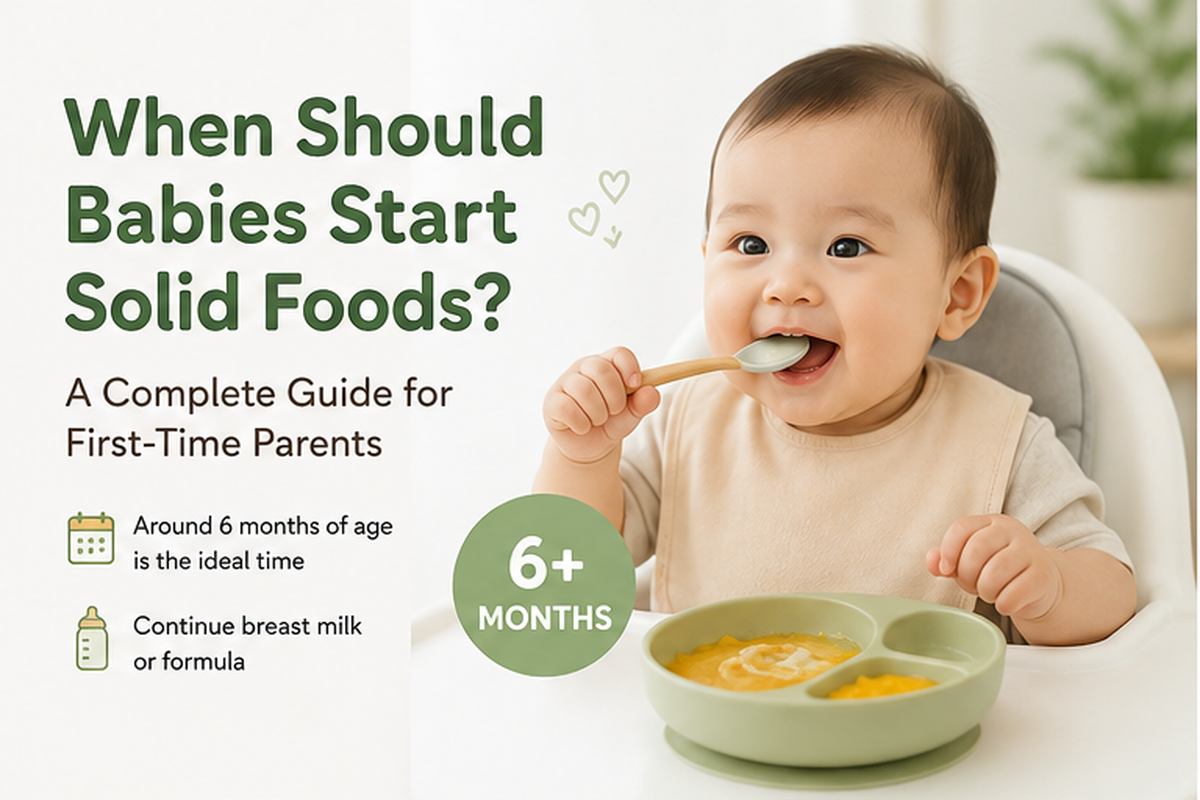
If you're wondering whether your baby is ready for their first bite, you're not alone.
When Should Babies Start Eating Solid Foods?
The World Health Organization (WHO) and many pediatric health authorities recommend introducing complementary foods at around 6 months of age, while continuing breastfeeding or formula feeding.
Before 6 months, breast milk or formula provides all the nutrients your baby needs.
Around 6 months, babies begin to require additional nutrients—especially iron, zinc, healthy fats, and protein—to support their rapid growth and development.
5 Signs Your Baby Is Ready for Solid Foods
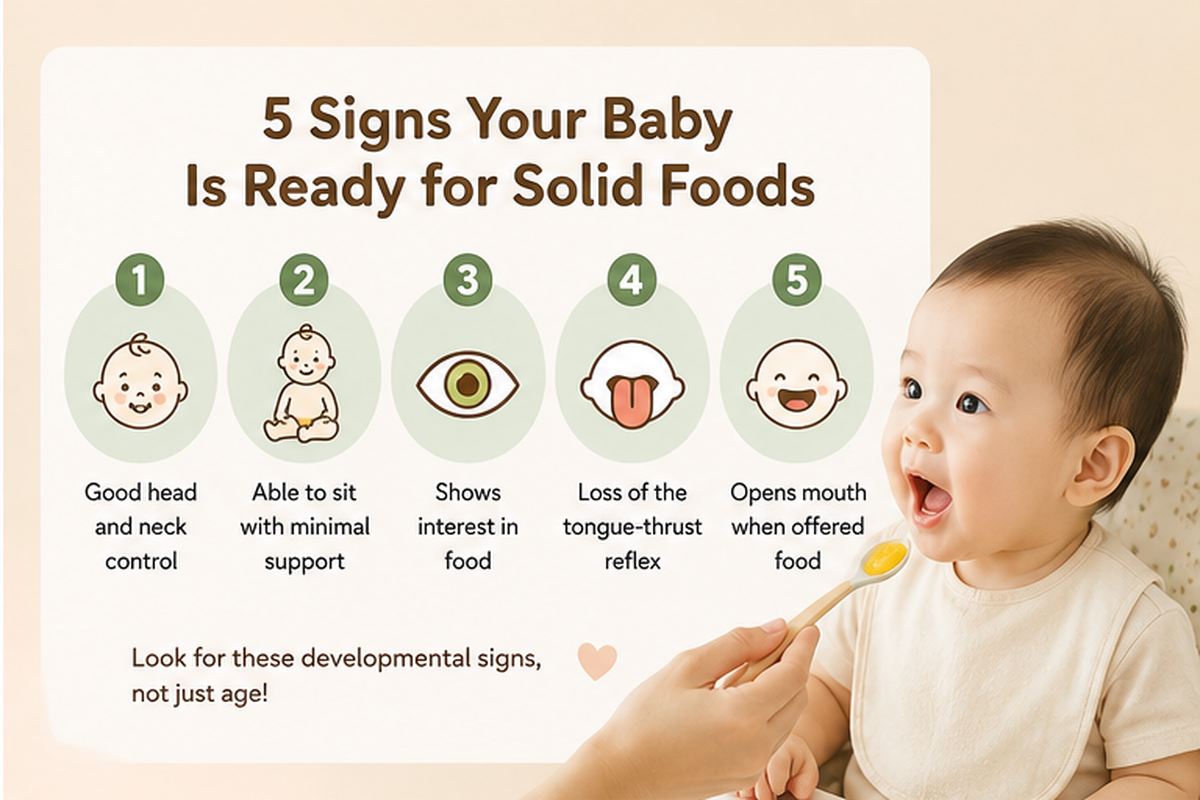
Instead of focusing only on age, look for these developmental signs:
1. Good Head and Neck Control
Your baby can hold their head steady without support.
2. Able to Sit with Minimal Support
Sitting upright helps your baby swallow food safely and reduces the risk of choking.
3. Shows Interest in Food
Your baby watches you eat, reaches for food, or opens their mouth when food is nearby.
4. Loss of the Tongue-Thrust Reflex
Babies naturally push objects out of their mouths when they're younger. Once this reflex decreases, they're more ready to swallow food.
5. Opens Mouth When Offered Food
A baby who eagerly opens their mouth when a spoon approaches is often showing readiness for solids.
Why Not Start Before 6 Months?
Introducing solids too early may increase the risk of:
- Digestive discomfort
- Reduced breast milk or formula intake
- Difficulty swallowing due to immature oral skills
- Increased choking risk
Every baby develops differently, so it's best to wait until your baby shows clear signs of readiness.
Starting solids is a special new milestone for both you and your little one. Follow your baby’s cues, begin slowly and enjoy exploring new tastes and textures together. If you are unsure whether your baby is ready, speak with your paediatrician for personalised advice.